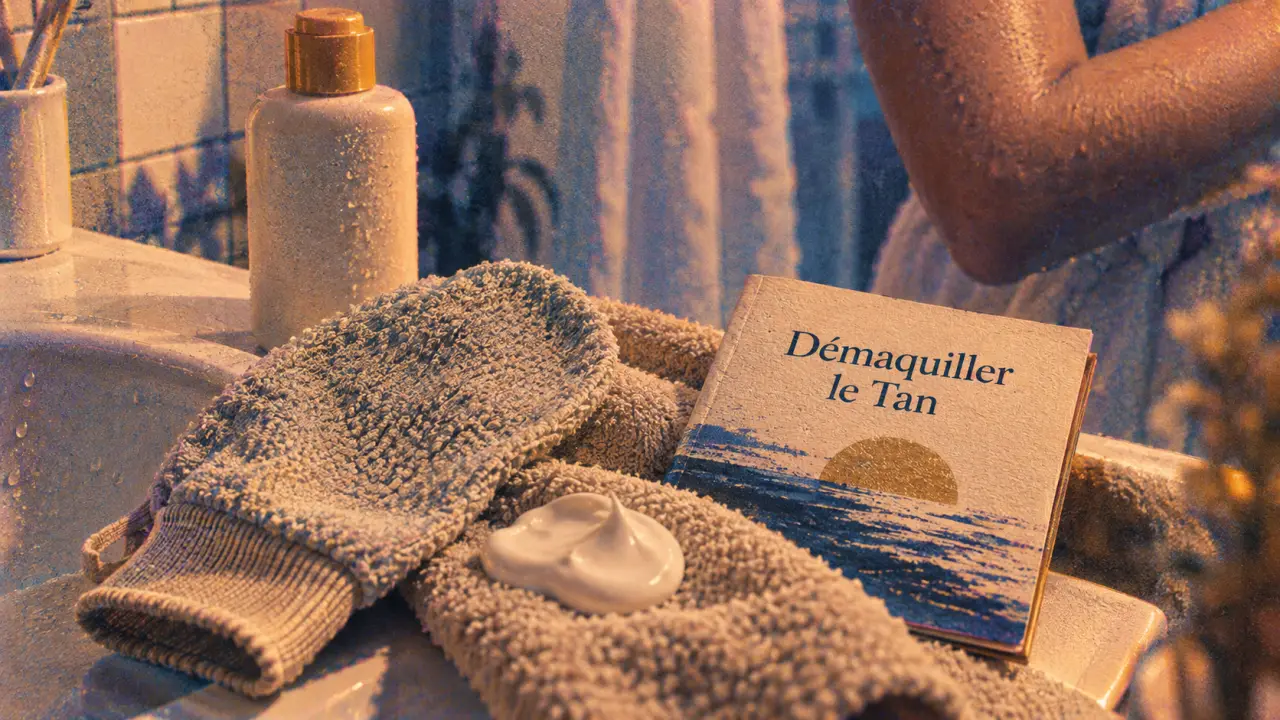
A natural sun tan cannot be erased overnight, but it can fade more evenly with patient, barrier-friendly care. The goal of sun tan removal is not to force pigment out of the skin. It is to support normal skin renewal while avoiding irritation that could make uneven colour more noticeable.
First, tell a sun tan from self-tanner
A tan from sun exposure develops when ultraviolet rays trigger increased pigment production in the skin. It fades gradually as surface skin cells are shed and replaced. This usually takes a few weeks, while tan lines may take longer to become less visible.
Self-tanner is different. Its colour sits mainly in the outer layer of the skin, so a shower, soak, and gentle exfoliation can help lift patchy or orange-looking areas more quickly. Treating both situations in the same way is a common reason people over-scrub their skin.
| What you see | Most helpful approach | What to expect |
|---|---|---|
| Natural sun tan or tan lines | Gentle routine, moisturising, daily sun protection | Gradual fading over weeks |
| Streaky self-tan | Warm shower or bath, soft cloth, dedicated remover | Patchiness may improve after a careful session |
| Build-up on hands, feet, knees, or elbows | Targeted, very gentle exfoliation on thicker areas | Improvement without treating the whole body harshly |
Build a gentle routine for natural tan fading
Cleanse softly and moisturise consistently
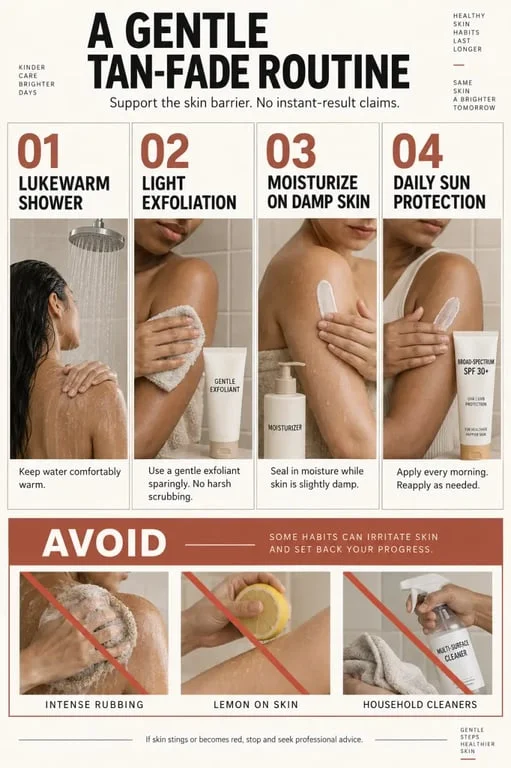
Use lukewarm rather than very hot water, then pat your skin dry instead of rubbing it with a towel. Apply a simple moisturiser while the skin is still slightly damp. This will not bleach a tan, but hydrated skin is less likely to become flaky, itchy, or visibly patchy as the colour fades.
Daily broad-spectrum sun protection matters too. New sun exposure can deepen the existing contrast and make it harder to judge whether your skin is evening out. If your skin is recovering from a health treatment or is especially reactive, keeping the routine uncomplicated is often the kindest choice. Comfort and skin tolerance should come before faster-looking results.
Choose one form of exfoliation, not every method at once
Mechanical exfoliation means using a soft wet washcloth, gentle sponge, or mild body scrub with a light touch. Chemical exfoliation uses products containing alpha hydroxy acids or beta hydroxy acids to loosen dead surface cells. Either approach may help reduce the visible dullness of pigmented dead skin cells, but neither should sting, burn, or leave the skin feeling tight.
Start conservatively, especially on dry, sensitive, recently shaved, or irritated skin. Choose one exfoliating method rather than combining several products or tools. Follow exfoliation with moisturiser, and stop if redness, soreness, or peeling appears. More friction does not mean faster or safer fading.
Use the mirror as a lens, not a verdict
Uneven colour can look more dramatic under a bathroom spotlight, beside a pale sleeve, or after the skin has become dry. These conditions change contrast: the tan may not have suddenly worsened, but the surrounding light, texture, and clothing can make its edges more visible.
Check your skin in daylight and focus on comfort as well as colour. A smooth, moisturised surface often makes tan lines look softer before the pigment itself has fully faded. This can help you assess changes more calmly and avoid repeating an aggressive treatment simply because the colour looks stronger under artificial light.
Remove self-tan streaks with targeted care
For self-tan removal, begin with a warm shower or brief bath to soften the outer layer. Work over the streaky area with a soft, damp cloth or exfoliating glove, without pressing hard. Rinse, reassess, and moisturise. A dedicated self-tanner remover soap, lotion, or mitt can be useful when colour has gathered in creases or around the ankles.
Hands and feet need extra restraint. Their callused areas may hold more colour, but the surrounding skin can still become irritated. If needed, use a very gentle nail buffer only on small, stubborn patches and never on broken or inflamed skin. Keep the correction local rather than turning it into a full-body scrub.
Skip shortcuts that can damage the skin barrier
- Do not use undiluted lemon juice. It can irritate the skin and may make pigmentation concerns worse.
- Do not use bleach, household cleaners, or Windex. These are not skincare products and can cause injury.
- Do not scrub until the skin feels raw. Over-exfoliation can disrupt the skin barrier, causing inflammation and longer-lasting unevenness.
- Do not layer several strong acids. Combining exfoliating products in one routine raises the chance of burning and peeling.
Be cautious with dark spot-lightening products as well. They may be appropriate for some concerns, but a tan, persistent pigmentation, and post-inflammatory marks do not always need the same approach. Patch-test new products and introduce only one change at a time. If a product causes discomfort, rinse it off and stop using it rather than trying to push through the reaction.
When professional advice is the safer next step
Speak with a dermatologist if colour changes do not match a typical fading tan, or if you develop painful redness, blistering, intense itching, or a rash after trying a product. It is also wise to seek guidance before using exfoliating acids on skin affected by eczema, a recent procedure, active treatment, or a history of significant sensitivity.
There is no need to rush into aggressive sun tan removal. Letting the skin renew at its own pace, while protecting and moisturising it, is usually the most reliable way to support a more even-looking tone. A gentle routine may take longer, but it gives irritated skin less to recover from along the way.
{“@type”:”Article”,”@context”:”https://schema.org”,”headline”:”How Can You Fade a Sun Tan Safely? Natural Fading, Gentle Exfoliation, and Self-Tan Removal”,”inLanguage”:”en-US”,”description”:”A natural sun tan cannot be erased overnight, but it can fade more evenly with patient, barrier-friendly care. The goal of sun tan removal is not to force pigment out of the skin….”}
Before you apply this beauty advice
A good beauty routine works best when it stays realistic. Before adding a new oil, mask, exfoliant, remover or lash product, check how your skin normally reacts, whether you are already using active ingredients, and whether the advice fits your daily habits. A gentle routine you can repeat is usually more useful than an intense treatment you abandon after two days.
If your skin is sensitive, patch testing matters. Try one new product at a time, wait long enough to notice redness or dryness, and avoid mixing too many treatments together. For persistent irritation, sudden pigmentation changes, eye-area problems or painful skin reactions, keep the article as general information and ask a qualified professional for personal advice.
Related guides to continue
To build a stronger understanding of this topic, continue with these related guides from the same site. They cover nearby decisions, maintenance points and practical details that often influence the final result.