
Berries can be a gentle, nourishing addition to a skin-supportive routine, especially when your complexion feels dull, dry, or affected by daily stress. Blueberries and goji berries provide antioxidants, vitamin C, fiber, and other plant compounds. They may support healthy-looking skin over time, but they do not treat acne, eczema, pigmentation, or other concerns that require medical care.
Why berries are linked to healthier-looking skin
Skin is exposed every day to ultraviolet light, pollution, smoke, and normal metabolic processes. These factors can increase free radicals, unstable molecules associated with oxidative stress. Over time, oxidative stress can affect collagen and elastin, the structures that help skin look firm and smooth.
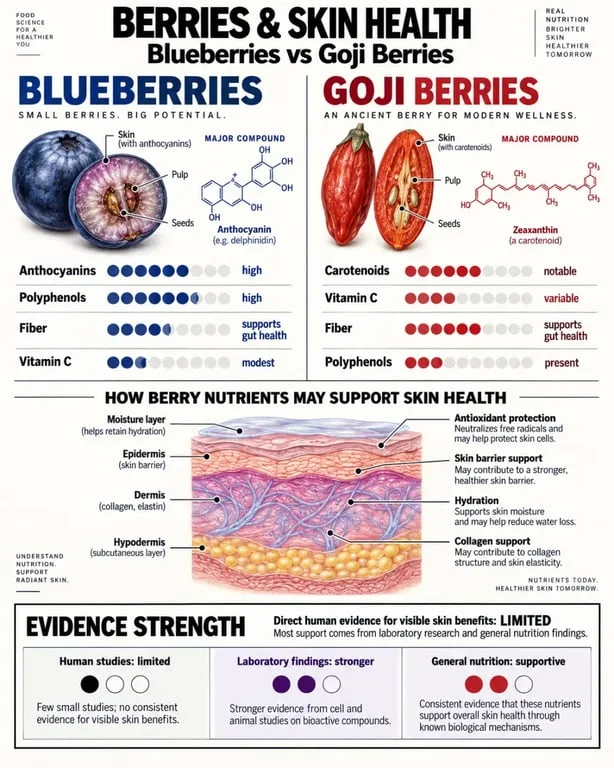
Berries contain antioxidant compounds that help neutralize free radicals. Their deep red, blue, and purple colors often come from polyphenols, including anthocyanins. This does not mean berries erase lines or prevent aging. A varied diet rich in colorful plants may support the skin’s natural defenses alongside sleep, hydration, gentle skincare, and daily sun protection.
Vitamin C and collagen support
Vitamin C contributes to collagen production and helps protect existing collagen from oxidative damage. One cup of blueberries, or 148 grams, provides 16% of daily vitamin C needs for men and 19% for women. Goji berries are also described as a source of vitamins A and C. Food alone cannot guarantee a visible change in firmness, but it can provide useful nutrients as part of a balanced diet.
Blueberries and goji berries: what each can offer
| Berry | Key components | Potential skin-related role | Best everyday use |
|---|---|---|---|
| Blueberries | Anthocyanins, vitamin C, fiber | Antioxidant support; fiber may also support the gut-skin relationship | Fresh or frozen in breakfast, yogurt, or smoothies |
| Goji berries | Vitamins A and C, carotenoids, polyphenols, amino acids, fatty acids | Potential support for hydration, nourishment, and the skin barrier | Dried in small amounts or as a formulated topical extract |
Blueberries for resilience and inflammation balance
One cup of blueberries contains almost 4 grams of fiber. Fiber helps support the gut microbiome, and the gut-skin relationship is an area of growing interest. Digestive balance and inflammation may influence how skin behaves in some people. This does not make blueberries a direct treatment for breakouts or redness, but they are a practical, low-effort fruit within a varied eating pattern.
Goji berries for dry-feeling skin
Goji berries, also called wolfberries, contain amino acids such as proline, betaine, and taurine, along with fatty acids including linoleic acid. Amino acids contribute to the skin’s natural moisturizing factor, while fatty acids support a comfortable, functioning barrier. These nutritional qualities make goji berries interesting for skin hydration, although direct evidence that eating them corrects dry skin remains limited.
Food and skincare do different jobs
Eating berries supports the body from within, while a topical product acts on the outer layers of the skin. Neither approach is automatically better. A daily serving of fruit cannot replace a moisturizer when the barrier feels weakened, and a berry serum cannot replace a nourishing diet.
Skin support is usually built through several simple habits. Adding berries to breakfast may improve the overall quality of a meal, increase fiber and fluids, and make space for other protective foods. If a visible benefit appears, it is more likely to come from this broader pattern than from one “hero” ingredient. This approach can feel especially helpful when skin becomes unpredictable after stress, illness, or changes in treatment.
Choosing a berry-based skincare product
Look for berry extract in the ingredient list instead of relying on a berry image on the packaging. The full formula matters as much as the extract. A moisturizer for dry skin may also contain humectants, emollients, or barrier-supporting ingredients. A serum may suit a simple routine, followed by moisturizer. Claims about brightening, hydration, or antioxidant protection should be understood as cosmetic support, not medical promises.
- Introduce one new product at a time.
- Patch test it on a small area before applying it to your face.
- Choose fragrance-free options if your skin is reactive or sensitized.
- Avoid rubbing crushed fresh berries directly onto the skin. Food acids, fibers, and additives may cause irritation.
What berries cannot replace
Antioxidants may help reduce the effects of oxidative stress, but they do not replace broad-spectrum sunscreen. UV exposure contributes to sunburn, premature visible aging, and skin cancer. Sunscreen and shade therefore remain essential, including when you eat antioxidant-rich foods or use skincare containing berry extracts.
The evidence for berries also varies widely. Some findings come from nutrition research, laboratory work, animal studies, or studies of isolated extracts rather than large human trials focused on skin outcomes. It is reasonable to enjoy berries for their nutritional value and possible skin benefits. It is less realistic to expect one berry to clear acne, fade melasma, or treat psoriasis or eczema.
A calm, practical way to include berries
Choose the option you can enjoy consistently. Fresh and frozen blueberries are equally convenient for many meals. Dried goji berries can be stirred into porridge or yogurt, although portion sizes matter because dried fruit is more concentrated. Pair berries with protein, healthy fats, and other colorful produce instead of treating them as a standalone beauty remedy.
If you have a berry allergy, take medication, are pregnant, or are managing a health condition, ask your pharmacist, dietitian, or clinician before making major dietary changes or using concentrated supplements. For persistent itching, painful acne, a spreading rash, or changes in a mole or lesion, seek advice from a qualified healthcare professional instead of relying on skincare ingredients.
{“@type”:”Article”,”@context”:”https://schema.org”,”headline”:”Berries Can Support Healthier-Looking Skin, but They Cannot Replace Treatment”,”inLanguage”:”en-US”,”description”:”Berries can be a gentle, nourishing addition to a skin-supportive routine, especially when your complexion feels dull, dry, or affected by daily stress. Blueberries and goji…”}
Before you apply this beauty advice
A good beauty routine works best when it stays realistic. Before adding a new oil, mask, exfoliant, remover or lash product, check how your skin normally reacts, whether you are already using active ingredients, and whether the advice fits your daily habits. A gentle routine you can repeat is usually more useful than an intense treatment you abandon after two days.
If your skin is sensitive, patch testing matters. Try one new product at a time, wait long enough to notice redness or dryness, and avoid mixing too many treatments together. For persistent irritation, sudden pigmentation changes, eye-area problems or painful skin reactions, keep the article as general information and ask a qualified professional for personal advice.
Related guides to continue
To build a stronger understanding of this topic, continue with these related guides from the same site. They cover nearby decisions, maintenance points and practical details that often influence the final result.