Facial pores cannot be permanently closed or erased, but they can look less visible when excess oil, congestion, irritation, and loss of firmness are managed gently. The goal is calmer, smoother-looking skin that remains comfortable in its natural texture, not poreless skin.
Why pores can look larger on the face
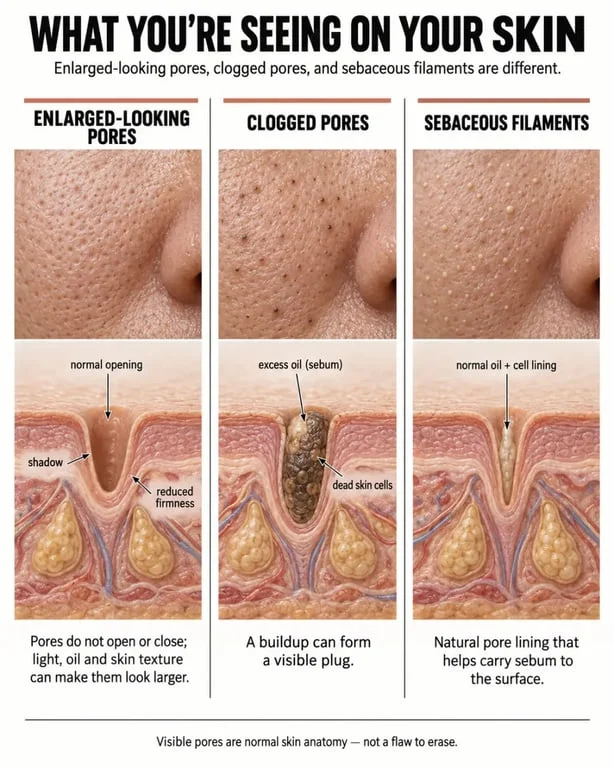
Pores are tiny openings in the skin, and everyone has them. Their apparent size is partly genetic, but everyday factors can make them stand out, especially around the nose, forehead, and inner cheeks. Excess oil, clogged pores, acne, inflammation, and reduced skin firmness can all affect how visible they look.
Clogged pores are not the same as sebaceous filaments
A clogged pore may contain oil, dead skin cells, and debris. It can sometimes develop into a blackhead or blemish. Sebaceous filaments are different: they are fine, pale or greyish dots that commonly appear on the nose and are a normal part of how sebum moves through the pore. Repeatedly extracting them may leave the area red and irritated without stopping them from returning.
Think of the skin’s surface as having subtle grooves. When oil and dead cells collect in them, shadows become more pronounced and the texture catches the light differently. The most helpful approach is not to “seal” the pore, but to keep its pathway clear, support the skin with hydration, and limit irritation. This is why harsh pore strips may create a short-lived visual effect without improving the skin’s balance.
Build a routine that makes pores less noticeable
Consistency matters more than a long list of products. A simple routine also reduces the temptation to over-treat the skin, which is especially helpful if your complexion is sensitive, recovering from a health treatment, or prone to dryness.
Morning: cleanse lightly, moisturize, protect
- Cleanse with lukewarm water and a gentle, non-comedogenic cleanser if your skin feels oily or has product residue. Avoid hot water and washcloth scrubbing.
- Apply a light moisturizer suited to your skin. Dehydrated skin can feel tight and look uneven, even when it is oily.
- Finish with a broad-spectrum, water-resistant sunscreen of SPF 30 or higher. Sun exposure can gradually affect skin firmness, which may make pores more noticeable over time.
Evening: remove the day without stripping the skin
Cleanse gently to remove sunscreen, makeup, and surface oil. If you wear heavier makeup, choose non-comedogenic formulas and remove them thoroughly rather than rubbing harder. Follow with moisturizer. This basic rhythm, clean, replenish, protect, can give the skin a more even appearance before stronger ingredients are considered.
Choose actives according to the issue you see
Two ingredients are often considered for visible pores, but they have different purposes. Introduce only one new active at a time and give your skin time to settle before adding another. Stinging, persistent redness, flaking, or burning are signs to pause and simplify your routine.
| Concern | Option to consider | How to use it carefully |
|---|---|---|
| Oiliness, blackheads, or congestion | Salicylic acid | It can help unclog pores. Start slowly and avoid combining it immediately with several exfoliating products. |
| Uneven texture or reduced firmness | Retinol | Apply at night, begin gradually, and moisturize. Daily sunscreen is essential while using it. |
| Sensitive or reactive skin | Gentle, non-comedogenic basics | Prioritize cleansing, moisturizer, and sunscreen before introducing exfoliating or retinoid products. |
Retinol is not appropriate for everyone. If you are pregnant, breastfeeding, managing a skin condition, or receiving medical treatment that affects your skin, ask a healthcare professional or dermatologist for advice before using it. A cautious routine is preferable to pushing through discomfort.
Habits that often make pore texture look worse
Many quick fixes create a cycle of irritation. Physical scrubs, frequent peeling, squeezing, digging into pores, and aggressive cleansing can disrupt the skin barrier. Inflammation may make texture and redness more visible, which can lead you to use even more products.
- Do not scrub your face until it feels “squeaky clean.”
- Avoid picking at blackheads or squeezing the nose area.
- Do not layer several acids, retinol, and abrasive exfoliants in the same routine.
- Choose non-comedogenic skincare and makeup when congestion is a concern.
- Give a new routine time to work instead of changing products every few days.
Makeup can soften the appearance of texture for a special occasion, but it works best over moisturized skin and well-applied sunscreen. Heavy layers on dry, irritated areas may settle into texture instead of blurring it.
When a dermatologist can offer more support
Home care is a sensible first step for many people, but a dermatologist can help if enlarged-looking pores appear alongside persistent acne, painful breakouts, scarring, sudden skin changes, or significant distress. A consultation can also clarify whether you are seeing congestion, sebaceous filaments, rosacea-related texture, or another concern that requires a different approach.
Professional options may include treatments aimed at skin texture or firmness, such as microneedling. These treatments are not essential for healthy skin and may be costly. Before considering a procedure, discuss its expected benefits, risks, recovery time, and whether your skin is calm enough for treatment. Visible pores are normal. The most useful result is skin that feels cared for, not skin pressured to meet an unrealistic standard.
{“@type”:”Article”,”@context”:”https://schema.org”,”headline”:”You Cannot Close Facial Pores, But You Can Make Them Look Smaller”,”inLanguage”:”en-US”,”description”:”Facial pores cannot be permanently closed or erased, but they can look less visible when excess oil, congestion, irritation, and loss of firmness are managed gently. The goal is…”}
Before you apply this beauty advice
A good beauty routine works best when it stays realistic. Before adding a new oil, mask, exfoliant, remover or lash product, check how your skin normally reacts, whether you are already using active ingredients, and whether the advice fits your daily habits. A gentle routine you can repeat is usually more useful than an intense treatment you abandon after two days.
If your skin is sensitive, patch testing matters. Try one new product at a time, wait long enough to notice redness or dryness, and avoid mixing too many treatments together. For persistent irritation, sudden pigmentation changes, eye-area problems or painful skin reactions, keep the article as general information and ask a qualified professional for personal advice.
Related guides to continue
To build a stronger understanding of this topic, continue with these related guides from the same site. They cover nearby decisions, maintenance points and practical details that often influence the final result.