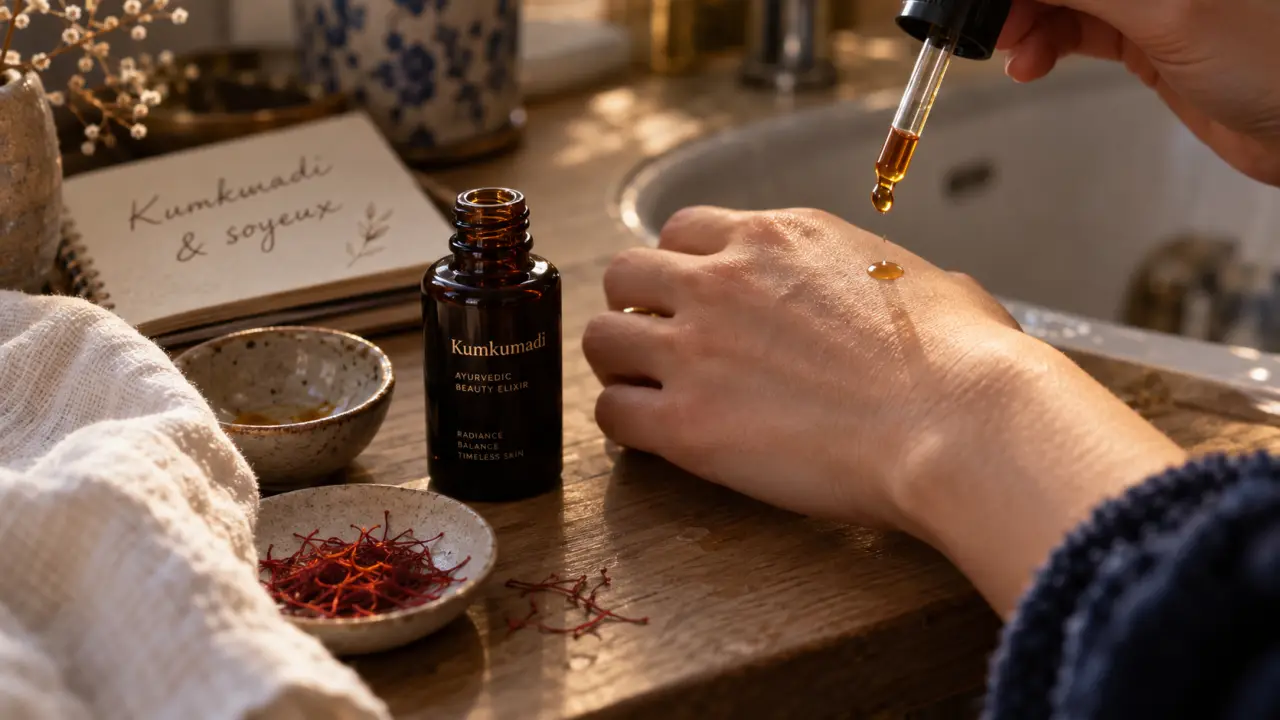
Kumkumadi oil may appeal when your skin looks dull, feels dry, or appears less even than usual. Before buying, look beyond the promise of radiance. Formulas vary in their base oils, botanical blends, fragrance, and texture. The best choice is one your skin can tolerate regularly, not necessarily the most elaborate bottle.
What Kumkumadi oil actually is
Kumkumadi oil, also called Kumkumadi Tailam, is a traditional Ayurvedic facial oil. “Kumkuma” refers to saffron, the ingredient most closely associated with this type of blend. It is not an essential oil and should not be used like one. Instead, it is a ready-to-use facial treatment made with botanical ingredients infused into a carrier oil.
How to make Kumkumadi at home: ingredients to create Kumkumadi Tailam
Sesame oil is a frequent base and may be described as Tila Taila in Ayurvedic terminology. Depending on the brand, the formula may also contain sandalwood, Manjistha, turmeric, licorice, vetiver, plant extracts, essential oils, or milk-derived ingredients. As a result, two products with the same name can feel very different on the skin.
Traditional appeal, realistic cosmetic expectations
Kumkumadi Tailam is traditionally used to support a luminous-looking complexion, softness, and a more even appearance. In modern skincare terms, an oil may reduce the feeling of tightness and give the skin a smoother, more reflective finish. It cannot erase pigmentation, heal scars, or replace treatment prescribed for acne, eczema, rosacea, or another skin condition. Consider it a comfort-focused cosmetic step in a gentle routine.
What it may do for your complexion
A well-tolerated facial oil can help seal in moisture applied underneath it and soften the look of rough, dehydrated areas. This is why Kumkumadi oil is often chosen for skin that appears tired, flaky, or less radiant. Saffron, licorice, Manjistha, and turmeric are commonly associated with claims about an even-looking tone and the appearance of dark spots or post-acne marks. The result, however, depends on the complete formula and your own skin.
- Dry or mature-feeling skin: may appreciate the cushioning feel and the softened appearance of fine dehydration lines.
- Dull skin: may look more luminous because a very small amount of oil improves surface slip and light reflection.
- Uneven-looking tone: may benefit from a consistent, sun-protected routine, although oil alone is not a pigment-correcting treatment.
- Oily or blemish-prone skin: may find some formulas too rich, particularly during active breakouts.
Your skin’s immediate environment also affects how an oil feels. Indoor heating, cold wind, a face mask, exercise, and a new active serum can all change your skin from one week to the next. Rather than deciding that your skin is simply “dry” or “oily,” notice where it feels tight, shiny, warm, or congested. Applying one drop to drier areas may be more comfortable than coating the whole face.
Use a few drops, preferably at night
Begin on clean skin while it is still slightly damp. Oil does not add water to the skin. It helps slow the loss of water already present. Warm the product between your palms, then press it over your face and neck or massage very lightly upward. Avoid rubbing hard around the eyes or over irritated areas.
A simple starting routine
- Cleanse with a mild product and pat the skin until it is damp, not dripping.
- Apply a water-based hydrating product or moisturizer if you use one.
- Use one to two drops of Kumkumadi oil over the whole face at first.
- Wait and observe how your skin feels the next morning before increasing the amount.
Night-time use is usually the simplest way to begin. If your skin is dry and comfortable with the formula, two to three drops may suit you. Very dry skin may prefer three to four drops. Sensitive skin can start with two drops every other night during the first week. In the morning, use only a small amount and finish with broad-spectrum sunscreen, especially if your goal is to improve the appearance of uneven tone or dark marks.
Vitamin C is generally best used in a separate, water-based step before the oil. With retinol, keep the routine simple. Introduce one product at a time, and consider alternating nights if your skin becomes dry or reactive. If you follow medical skincare advice, ask your dermatologist or pharmacist before adding a fragranced botanical oil.
Choose a formula by label, not by the saffron story
Saffron may define the product’s identity, but it does not tell you whether the formula will suit your skin. Read the full ingredient list and compare what you are actually buying: bottle size, price per millilitre, carrier oil, fragrance ingredients, shelf life, and available quality information. A dark glass bottle and a clear batch number are practical packaging details, as oils can deteriorate with heat, light, and air.
| What to check | Why it matters |
|---|---|
| Full ingredient list | Helps identify sesame, essential oils, milk-derived ingredients, and known personal allergens. |
| Batch number and shelf life | Makes the product easier to trace and helps you avoid using an old or oxidised oil. |
| Testing or manufacturing information | Claims such as GMP, dermatological testing, or a Certificate of Analysis are more useful when clearly documented. |
| Price per millilitre | Lets you compare a small premium bottle with a larger option fairly. |
| Texture and skin-type guidance | A sesame-rich, richly scented oil may not suit the same person as a lighter, simpler blend. |
Safety comes before a nightly ritual
Perform a patch test before applying Kumkumadi oil to your face. Apply a small amount to the inner arm or behind the ear and leave it in place according to the product directions. If itching, burning, swelling, a rash, or persistent redness develops, rinse gently and stop using the product. Patch testing is especially important with sensitive skin, fragrance sensitivity, sesame allergy, or a history of contact dermatitis.
Pause use during active, inflamed acne if oil tends to make your skin feel congested. Formulas containing essential oils may be uncomfortable on a weakened skin barrier, and those containing milk are not suitable for everyone. During pregnancy or breastfeeding, check the exact formula with a healthcare professional, particularly when it contains concentrated botanicals or essential oils. Store the bottle tightly closed, away from direct light and heat, and stop using it if its smell or texture changes noticeably.
{“@type”:”Article”,”@context”:”https://schema.org”,”headline”:”Kumkumadi Oil for Radiance: How to Choose and Use It on Sensitive Skin”,”inLanguage”:”en-US”,”description”:”Kumkumadi oil may appeal when your skin looks dull, feels dry, or appears less even than usual. Before buying, look beyond the promise of radiance. Formulas vary in their base…”}
Related guides to continue
To build a stronger understanding of this topic, continue with these related guides from the same site. They cover nearby decisions, maintenance points and practical details that often influence the final result.