
Castor oil can help seal in moisture on the feet, especially when the soles feel dry, rough, tight, or flaky. Its thick texture makes it well suited to a bedtime routine: apply a small amount, massage it in, and cover your feet with socks. The goal is softer, more comfortable skin, not a cure for every foot concern.
What castor oil can realistically do for your feet
Castor oil is a dense, plant-derived oil with an occlusive texture. It forms a film over the skin that slows moisture loss. This can be useful when your feet look ashy, feel rough after showering, or develop hardened areas from walking, standing, or wearing open-backed shoes.
It helps hold moisture where feet need it most
The heels, balls of the feet, and outer edges often feel drier than other areas because the skin is thicker and exposed to repeated friction. Castor oil does not add water to the skin by itself, but it can help seal in moisture that is already present. Applying it to slightly damp, towel-dried feet may therefore be more effective than applying it to completely dry skin.
Massage adds a comfort benefit of its own
A slow foot massage can feel soothing after a long day. Work from the heel toward the arch and toes with light, comfortable pressure, and avoid pressing on painful areas. The oil improves glide, while the massage may support relaxation and local circulation. This is a comfort measure, not a treatment for swelling, persistent pain, or circulation problems.
Softening the edge of a heel can also improve the overall appearance of the feet. When the skin around the ankle, heel edge, and sole feels supple rather than chalky, your feet may look more cared for without aggressive exfoliation. The aim is a smoother feel and a more comfortable transition between skin, footwear, and movement, not perfectly polished skin.
The overnight routine: a little goes a long way
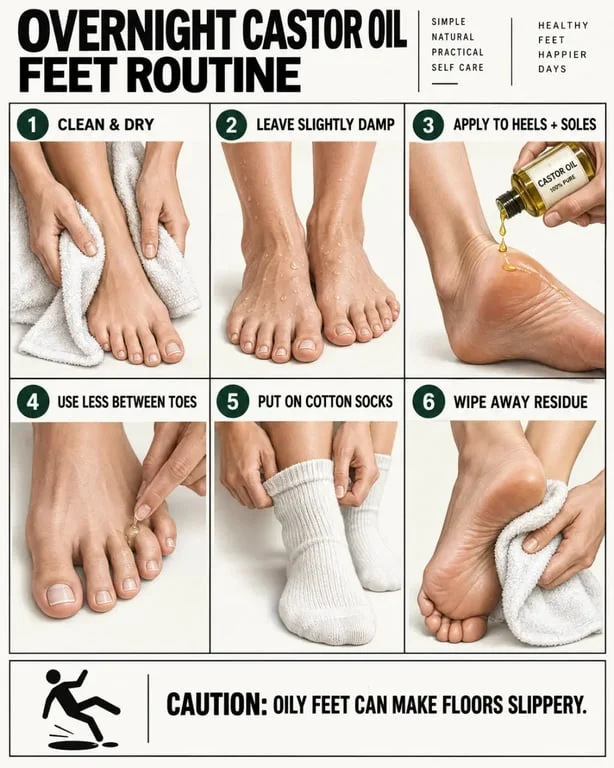
You can leave castor oil on your feet overnight if your skin tolerates it. Because the oil is viscous and can transfer easily, cotton socks help protect your bedding and keep the application in place.
- Wash your feet and dry them carefully, including between the toes.
- If your skin is very dry, leave it slightly damp rather than drying it completely.
- Warm a small amount of castor oil between your palms. Start with a few drops per foot, since applying more will not necessarily improve the result.
- Massage the oil mainly into the heels, soles, and rough patches. Use less around and between the toes.
- Put on clean, breathable cotton socks and leave them on overnight.
- In the morning, wash or wipe away any residue if it feels uncomfortable.
Try the routine a few times a week, then adjust it according to how your skin feels. For rough heels, regular application is generally more useful than applying a thick layer occasionally. Avoid walking barefoot on smooth floors immediately afterward, because the oil can make surfaces slippery.
Castor oil, heel balm, and antifungal care are not interchangeable
The right option depends on the problem you are trying to address. Castor oil is mainly a moisture-retention and comfort option. It is not automatically the best choice for every type of dryness or irritation.
| Concern | Most relevant option | What to expect |
|---|---|---|
| Dry, rough heels | Castor oil or a dedicated heel balm | Improved softness with regular use and less friction |
| Very thick, stubborn hard skin | A foot cream formulated for rough skin | A more targeted approach than oil alone |
| Itchy, peeling skin between the toes | An appropriate antifungal treatment | Castor oil should not replace treatment for athlete’s foot |
| Open cracks, bleeding, warmth, or increasing pain | Advice from a healthcare professional | Assessment matters more than home care |
Castor oil may feel soothing on dry skin around the affected area, but it is not a proven cure for athlete’s foot. Applying oil between damp toes can also trap unwanted moisture. If itching, scaling, odor, or peeling persists, use appropriate antifungal care and seek professional advice when needed.
The “detox through your feet” claim needs a clear boundary
Putting castor oil on your feet does not detox your body through the soles. The skin is a protective barrier, not an exit route for removing internal toxins. A relaxing massage, warm socks, and softer feet can make an evening routine feel restorative, but that sensation should not be confused with a cleansing medical effect.
Keeping expectations realistic helps you avoid spending time and money on claims that sound reassuring but cannot be supported. Use castor oil because you like its texture and because it helps seal in moisture, not because you expect it to address fatigue, digestive concerns, or illness.
When to be cautious with castor oil on feet
Natural does not always mean suitable for every skin condition. Before applying castor oil widely, test a small amount on a limited area and watch for redness, itching, burning, or a rash. Stop using it if irritation appears.
- Do not apply it to open wounds, bleeding fissures, or areas that look infected.
- Take extra care if you have diabetes, reduced sensation in your feet, or circulation concerns. Ask a healthcare professional before starting a new foot routine.
- Avoid using it during an eczema flare-up unless a clinician who knows your skin has advised it.
- Keep the application light around the toes, where trapped moisture may feel uncomfortable.
For everyday dry feet, a modest overnight application can be a gentle addition to your routine. If discomfort, deep cracking, or other skin changes continue despite regular care, seek tailored advice rather than simply applying more oil.
{“@type”:”Article”,”@context”:”https://schema.org”,”headline”:”Castor Oil on Feet Can Soften Dry Heels, With a Few Important Limits”,”inLanguage”:”en-US”,”description”:”Castor oil can help seal in moisture on the feet, especially when the soles feel dry, rough, tight, or flaky. Its thick texture makes it well suited to a bedtime routine: apply a…”}
Before you apply this beauty advice
A good beauty routine works best when it stays realistic. Before adding a new oil, mask, exfoliant, remover or lash product, check how your skin normally reacts, whether you are already using active ingredients, and whether the advice fits your daily habits. A gentle routine you can repeat is usually more useful than an intense treatment you abandon after two days.
If your skin is sensitive, patch testing matters. Try one new product at a time, wait long enough to notice redness or dryness, and avoid mixing too many treatments together. For persistent irritation, sudden pigmentation changes, eye-area problems or painful skin reactions, keep the article as general information and ask a qualified professional for personal advice.
Related guides to continue
To build a stronger understanding of this topic, continue with these related guides from the same site. They cover nearby decisions, maintenance points and practical details that often influence the final result.