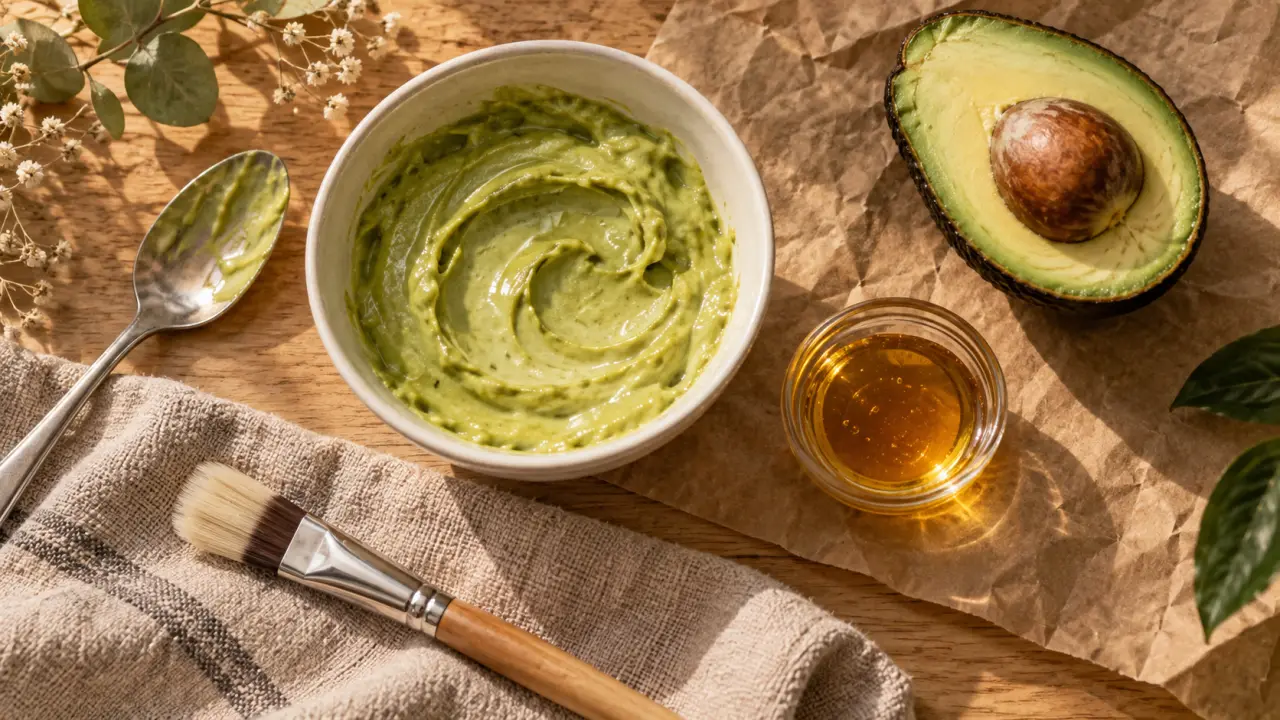
A face mask with avocado and honey is a simple option when your skin feels dry, tight, or dull. Avocado creates a creamy base, while honey gives the mixture a smoother, moisture-focused feel. The mask will not treat a skin condition or transform your complexion overnight, but it can make a pleasant addition to a quiet self-care routine.
Why avocado and honey work well together
Ripe avocado makes a practical base for a homemade mask. Its flesh is easy to mash into a smooth paste, and it is associated with healthy fats, vitamin E, vitamin C, and antioxidants. On the skin, its main cosmetic appeal is comfort. The mixture can feel nourishing and may leave dry-looking skin feeling softer after rinsing.
Honey has a thicker texture and is often used in skincare for its humectant qualities. In other words, it can help the skin hold on to moisture. Honey is also associated with antioxidant and antimicrobial properties. These qualities do not make a homemade mask a treatment for acne, eczema, or irritation, but they explain why honey is popular in gentle, moisture-focused routines.
Used together, the ingredients create a balanced texture. Avocado gives the mask body and slip, while honey reduces the crumbly feel that plain mashed avocado can have. A smooth mixture is easier to spread and rinse away. If the mask is lumpy or too thick, it may pull unevenly at the skin, so thorough mashing is worth the extra minute.
The simple two-ingredient recipe
Choose an avocado that is ripe enough to mash easily but does not smell sour or spoiled. A slightly bruised avocado is fine if the flesh is still fresh. Use a clean bowl and spoon, prepare only what you plan to use that day, and discard any leftovers rather than storing the mixture.
| Ingredient | Amount | Purpose in the mask |
|---|---|---|
| Ripe avocado | 1/2 avocado | Creates a creamy, nourishing base |
| Honey | 1 tablespoon | Adds slip and supports a moisture-focused feel |
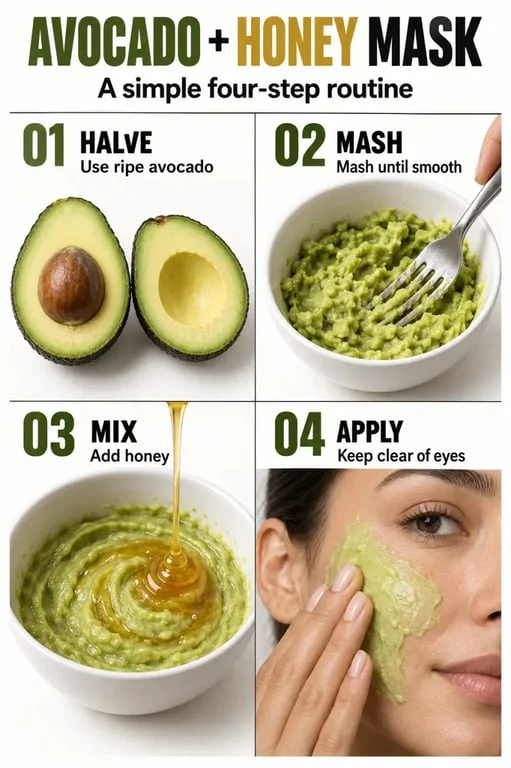
- Mash the avocado thoroughly with the back of a fork or spoon until it is as smooth as possible.
- Add the honey and mix until the colour and texture are even.
- If the mixture seems too thick to spread, mash it further rather than adding water.
- Use the mask immediately. Food-based mixtures are not designed for storage.
The finished mask should form a creamy paste that stays on the face without dripping. Small pieces of avocado are not necessarily a problem, but a smooth texture is more comfortable and easier to remove.
Apply, wait, rinse, and moisturize
Keep the application gentle
Start with clean, dry skin. Using clean fingers or a freshly washed makeup brush, apply a thin, even layer over the cheeks, forehead, chin, and jawline. Avoid the eye contour, eyelids, and lips. Do not apply the mask to broken, sunburned, actively irritated, or freshly exfoliated skin.
Ten to twenty minutes is enough
Leave the mask on for 10 to 20 minutes. You do not need to wait until it dries completely, since this is not a clay mask. If you notice stinging, heat, itching, or increasing discomfort, rinse it off immediately with lukewarm water.
To remove the mask, wet your hands first and gently loosen the mixture with light circular movements. Rinse thoroughly with warm water, then pat, rather than rub, the skin dry with a clean towel. Finish with your usual moisturizer to support the hydration-focused feel. The result is likely to be temporary softness and a fresher-looking surface, not a permanent change in skin texture or tone.
Who may enjoy it, and who should be cautious
This homemade mask may suit people with normal, dry, dehydrated-feeling, or dull-looking skin who want an inexpensive moment of care. Oily or acne-prone skin can respond differently from one person to another. Natural ingredients are not automatically suitable for every complexion.
If your skin is sensitive or reactive, perform a patch test first. Apply a small amount of the prepared mixture to the inner forearm or behind the ear, leave it briefly, rinse, and observe the area over the next day. Do not use the mask if you know you are allergic to avocado, honey, or bee products.
For rosacea, eczema, persistent acne, contact dermatitis, or unexplained facial irritation, ask a dermatologist or another healthcare professional before trying kitchen-based skincare. Stop using the mask if your skin reacts, even if you have used the ingredients safely in food.
Optional additions: less is often more
The basic avocado-and-honey version is the simplest place to begin. Additional ingredients can change the texture, scent, and irritation risk, so they are not necessary for a satisfying mask.
- Coconut oil: can make the mask richer and more occlusive, which may feel pleasant on very dry skin. It may feel too heavy for some acne-prone or congested skin.
- Lemon juice: is acidic and can sting or irritate sensitive skin. It is best avoided in a face mask, especially before sun exposure.
- Apple-cider vinegar: is also acidic and may reduce comfort on reactive skin. Do not assume it will balance your skin simply because it is a popular DIY ingredient.
- Lavender essential oil: adds fragrance rather than a required skincare benefit. Essential oils may trigger sensitivity, so skipping them is the safer choice for facial use.
A simple mask used occasionally is often more sensible than a complicated blend. Gentle cleansing, a short application time, careful rinsing, and a familiar moisturizer usually create a calmer experience than adding stronger ingredients. Keep your expectations realistic: this avocado and honey face mask can support a brief softening and self-care ritual, but it is not a substitute for treatment when a skin problem persists.
{“@type”:”Article”,”@context”:”https://schema.org”,”headline”:”Can an Avocado and Honey Face Mask Soften Dry-Looking Skin in 20 Minutes?”,”inLanguage”:”en-US”,”description”:”A face mask with avocado and honey is a simple option when your skin feels dry, tight, or dull. Avocado creates a creamy base, while honey gives the mixture a smoother,…”}
Before you apply this beauty advice
A good beauty routine works best when it stays realistic. Before adding a new oil, mask, exfoliant, remover or lash product, check how your skin normally reacts, whether you are already using active ingredients, and whether the advice fits your daily habits. A gentle routine you can repeat is usually more useful than an intense treatment you abandon after two days.
If your skin is sensitive, patch testing matters. Try one new product at a time, wait long enough to notice redness or dryness, and avoid mixing too many treatments together. For persistent irritation, sudden pigmentation changes, eye-area problems or painful skin reactions, keep the article as general information and ask a qualified professional for personal advice.
Related guides to continue
To build a stronger understanding of this topic, continue with these related guides from the same site. They cover nearby decisions, maintenance points and practical details that often influence the final result.