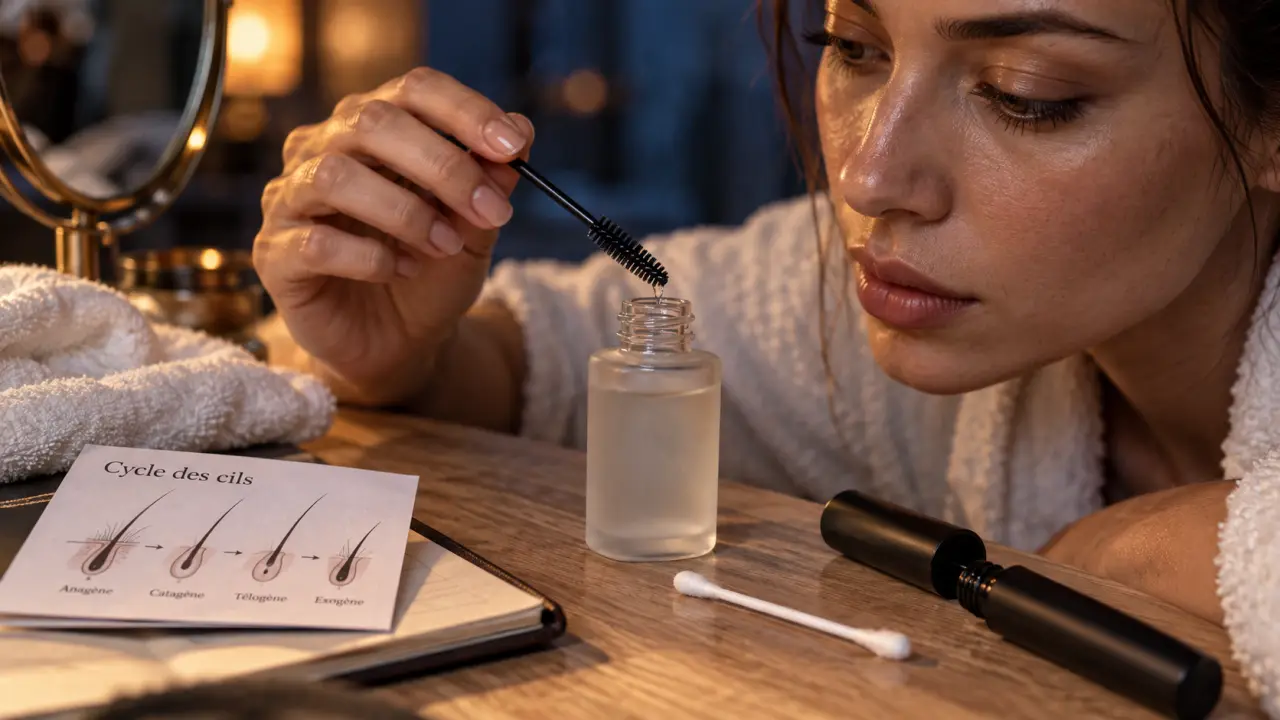
Longer-looking lashes usually come from protecting the lashes you already have rather than trying to force faster growth. Gentle cleansing, careful makeup removal, and realistic expectations can support better lash retention while new lashes follow their natural cycle.
Start with the eyelash cycle, not a quick fix
Each eyelash grows from a follicle and moves through four overlapping stages: anagen, the active growth phase; catagen, the transition phase; telogen, the resting phase; and exogen, when the lash sheds and is replaced. Since individual lashes are at different stages at the same time, losing a few lashes is usually normal.
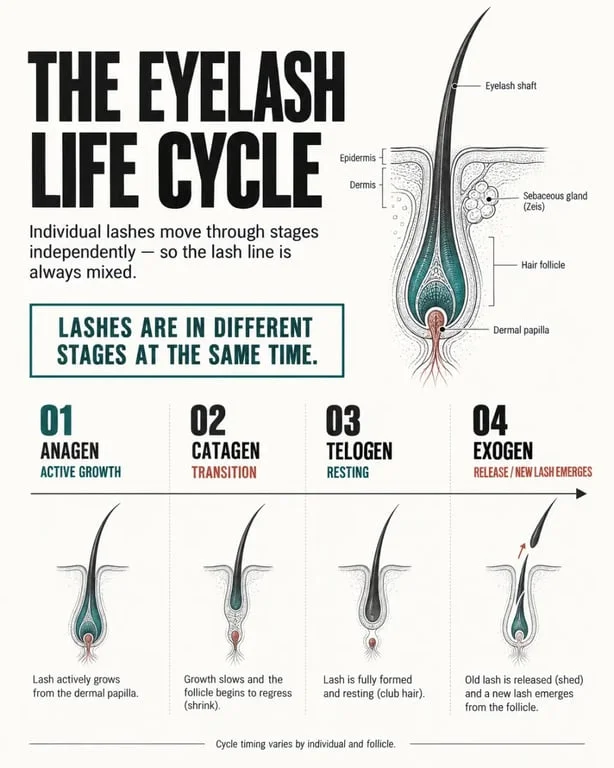
The anagen phase may last about 4 to 10 weeks, while the full eyelash life cycle can take 4 to 11 months. Growth is therefore gradual, and one sparse area may take longer to fill in than another. Genetics also influence your natural maximum length, density, curl, and thickness.
Regrowth after damage takes patience
If lashes were pulled out, caught in a curler, or weakened by aggressive removal, they can often grow back naturally. Typical regrowth estimates range from 4 to 8 weeks. Lashes that have been pulled out may take 6 to 12 weeks to return. Avoid checking or tugging at the area repeatedly. Protecting the follicle and the surrounding eyelid skin is the gentlest approach while you wait.
Build a daily routine that protects lash length
The most useful answer to how to grow lashes is often to reduce breakage. A lash cannot look long if its fragile tip keeps snapping or if it is removed before its normal shedding phase.
- Remove mascara every evening with a gentle eye cleanser or suitable remover. Press it lightly against closed lids, then wipe downward instead of rubbing back and forth.
- Use a clean spoolie to brush dry lashes lightly and remove loose debris. Do not share mascara wands or use old, dried-out products.
- Apply mascara from the base upward with a light hand. Several thin coats are usually easier to remove than one heavy coat.
- Use a lash curler only on clean, dry lashes, before mascara. Pulling the curler away while it is clamped can remove lashes.
- Avoid sleeping in eye makeup, rubbing tired eyes, or picking at adhesive, mascara flakes, and extensions.
Small habits can add up. Friction, leftover makeup, dried glue, and repeated pulling place mechanical stress on the lash line. A gentle cleanse each night helps remove these irritants and protects the lashes you are trying to retain.
Choose products by their real purpose
Not every product marketed for lashes does the same job. Some improve appearance immediately, some condition the hair shaft, and one prescription option is intended to stimulate eyelash growth. Separating these goals helps you choose carefully and avoid unrealistic promises.
| Option | What it can do | When you may notice a change | Key caution |
|---|---|---|---|
| Mascara | Creates instant length, definition, lift, or volume | Immediately | Remove gently every night |
| Cosmetic lash serum | May condition lashes and support a healthier-looking appearance | Often requires consistent use for weeks | Stop if stinging, redness, or swelling occurs |
| Bimatoprost, marketed as Latisse | Prescription treatment for eyelash growth | Full results after daily use for at least two months | Requires medical advice and careful application |
| Lash lift, tint, or extensions | Changes curl, colour, length, or fullness cosmetically | Immediately | Does not equal biological regrowth |
Serums and prescription treatment are not interchangeable
Cosmetic serums commonly contain conditioning ingredients or peptides. They may help lashes feel less brittle or look fuller over time, but they should not be presented as guaranteed growth treatments. Follow the label, keep the applicator clean, and apply the product only where directed along the upper lash line.
Bimatoprost, marketed as Latisse, is an FDA-approved medication for eyelash growth. Discuss it with a qualified clinician, particularly if you have sensitive eyes, an eye condition, use eye medication, or wear contact lenses. Possible effects include itchy or red eyes, dryness, darkened eyelids, iris pigmentation changes, and unwanted facial hair around the eyes if the product is misapplied.
Skip home remedies that can irritate the eye area
Castor oil, coconut oil, petroleum jelly, olive oil, aloe vera, and green tea are frequently suggested online. Some may make lashes look shinier or reduce the dry appearance of the hair shaft, but they are not consistently proven to stimulate new eyelash growth. Oils can blur vision, migrate into the eye, or cause irritation in sensitive people.
Trimming lashes does not make them grow back longer or thicker. It only leaves a blunt, shorter edge. Vitamins are not a shortcut unless a clinician identifies a nutritional deficiency. Regular meals with enough protein, healthy fats, vitamins, minerals, iron, and folate support normal hair biology, but they cannot override genetics.
Know when sparse lashes need professional advice
After a brief episode of pulling, breakage, or extension damage, gentle care and time are often appropriate. Consider pausing extensions, lash lifts, waterproof mascara, and any product that stings until the eyelids are calm. A professional service should never be painful, excessively itchy, or leave the lash line inflamed.
Seek advice from an ophthalmologist, dermatologist, or another qualified healthcare professional if lash loss is sudden, patchy, one-sided, persistent, or accompanied by redness, scaling, pain, itching, eyelid swelling, or changes in vision. Conditions such as blepharitis, dermatitis, alopecia, thyroid disorders, and medication effects can contribute to thinning lashes. Professional guidance can help distinguish a cosmetic concern from a condition that needs care.
{“@type”:”Article”,”@context”:”https://schema.org”,”headline”:”How to Grow Lashes Safely: Protect Length, Understand Regrowth, and Choose Treatments Carefully”,”inLanguage”:”en-US”,”description”:”Longer-looking lashes usually come from protecting the lashes you already have rather than trying to force faster growth. Gentle cleansing, careful makeup removal, and realistic…”}
Before you apply this beauty advice
A good beauty routine works best when it stays realistic. Before adding a new oil, mask, exfoliant, remover or lash product, check how your skin normally reacts, whether you are already using active ingredients, and whether the advice fits your daily habits. A gentle routine you can repeat is usually more useful than an intense treatment you abandon after two days.
If your skin is sensitive, patch testing matters. Try one new product at a time, wait long enough to notice redness or dryness, and avoid mixing too many treatments together. For persistent irritation, sudden pigmentation changes, eye-area problems or painful skin reactions, keep the article as general information and ask a qualified professional for personal advice.
Related guides to continue
To build a stronger understanding of this topic, continue with these related guides from the same site. They cover nearby decisions, maintenance points and practical details that often influence the final result.
1 thought on “How to Grow Lashes Safely: Protect Length, Understand Regrowth, and Choose Treatments Carefully”
Comments are closed.